
Red-backed Fairywren Social Behavior
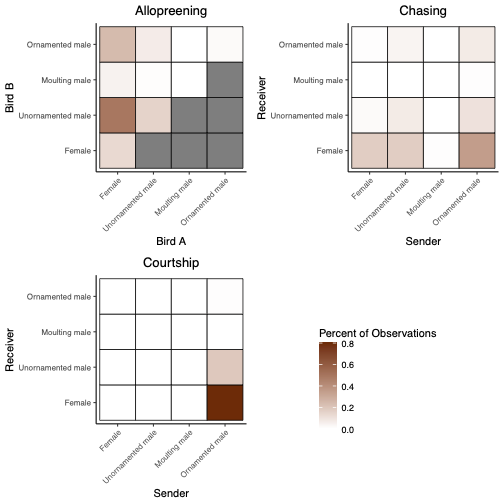
Alternative reproductive tactics (ARTs) consist of two or more distinct strategies that evolve within the same sex in order to reproduce. In the Red-backed Fairywren (Malurus melanocephalus), ornamented males (red and black) are socially dominant and invest heavily in extra-pair paternity, whereas unornamented males (brown) invest more in parental care and mate guarding. This system has been studied for many years; however, as with most species of birds, studies have taken place almost exclusively during the breeding season. A growing body of research supports the idea that the nonbreeding season – despite its name – can affect the dynamics of the breeding season. This project seeks to fill this knowledge gap in the fairywren system and determine the extent to which ARTs persist into the nonbreeding season.
The study evolved from my undergraduate honors thesis into a collaboration involving 16 coauthors and 3 years of data collection. My coauthors and I demonstrate differential investment in social behaviors among male phenotypes (specifically courtship and allopreening behavior) and speculate that these behaviors could function in mate attraction outside of the breeding season. You can read more about this project in a peer-reviewed publication in Emu or learn more about our statistical approach via this GitHub repository.
Greater Ani Sex Ratios
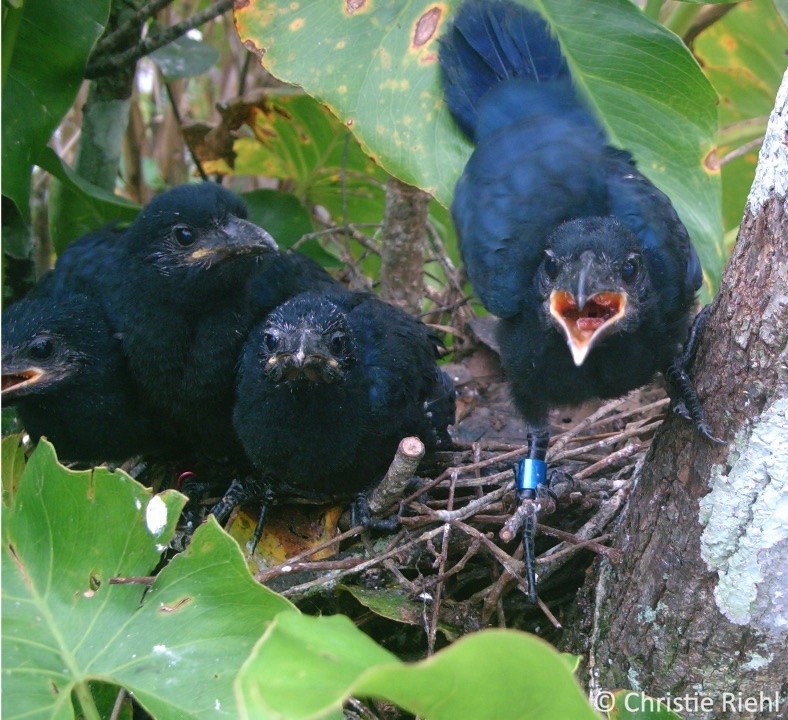
Sex allocation (investment in male vs. female offspring) has long fascinated evolutionary biologists. A massive scientific literature has been dedicated to why the ratio of male to female offspring might differ from 50:50. Nevertheless, among vertebrates, few clear trends have emerged among rival hypotheses and their empirical support. My advisor, Christie Riehl (Associate Professor, Ecology & Evolutionary Biology, Princeton University), and I teamed up to test a number of these hypotheses in an eleven-year dataset of nesting Greater Anis (Crotophaga major). These tropical birds have an unusual mating system: 2-3 pairs of adults lay eggs together in a communal nest, and offspring from previous broods often act as non-reproductive helpers.
Using Christie’s detailed nest monitoring data, I conducted model selection to determine if any factors could reliably predict the sex of offspring and found no support for adaptive sex ratio adjustment. Additional details about this project are available in our paper published in Behavioral Ecology and Sociobiology, and the R code for the analyses is available in this GitHub repository. All credit goes to Christie for the charismatic study species photo.
Data Analytics at Rutgers SAS
On a small data team in the School of Arts and Sciences Dean’s Office, I support decision-making with analysis and reporting drawn from human resources, academic program, space, course, student, and external benchmarking data, and I write ETL pipelines that keep those products current. I especially enjoy the parts of this work that can be shared openly, and I plan to grow a set of public, open-source projects tied to the role.
IPEDS B1G Degrees Awarded (2026)
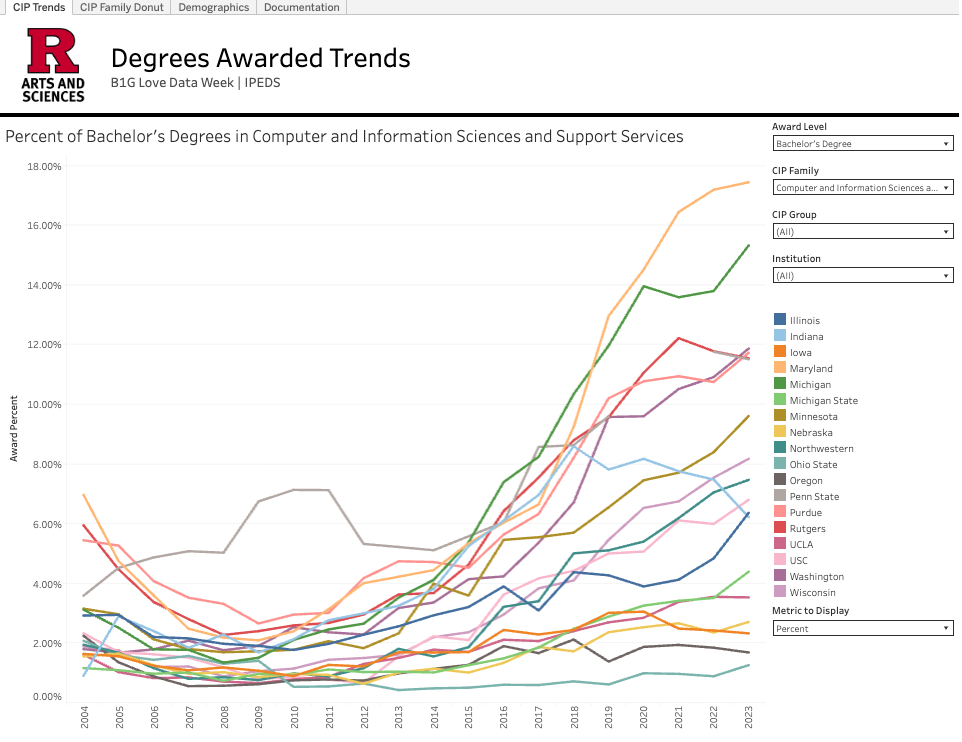
An interactive Tableau dashboard comparing degree completions across the Big Ten Academic Alliance, drawn from the U.S. Department of Education’s IPEDS Completions survey; it lets a viewer compare institutions and follow trends by field of study (CIP code) over time. I built it for the Big Ten Academic Alliance’s Love Data Week Data Visualization Faculty and Staff Championship, where it was a finalist representing Rutgers.

Data Analytics at Trillium Trading
In trading, the velocity and accuracy of information are paramount. Strategic decision-making requires synthesized, real-time insights delivered through robust infrastructure. During my tenure at Trillium Trading, I transitioned from ad-hoc analysis to a centralized data ecosystem. My primary focus was the engineering of a full-stack data pipeline. I developed an ETL system using R and MySQL to automate the collection and processing of firm data, which fed into quantitative forecasting and risk management models. To bridge the gap between complex data and stakeholder utility, I deployed interactive applications using R Shiny and Python Dash, and integrated conversational AI to allow stakeholders to query Key Performance Indicators (KPIs) using natural language. While the specific financial models remain proprietary, the infrastructure we built to support them was profiled by Posit as a case study in enterprise data science (read on the Posit website or view an archived PDF).
Carolina Wren Life History Evolution
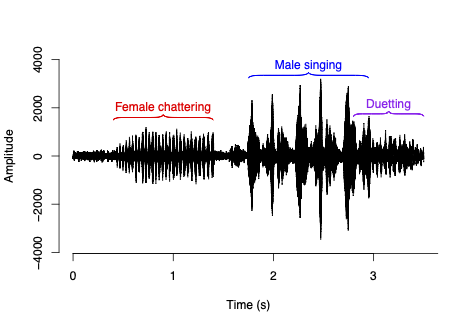
The Carolina Wren (Thryothorus ludovicianus) is a common backyard bird throughout the eastern United States. However, the species is unusual in that its social system shares much more in common with tropical than temperate zone species. Mated pairs of Carolina Wrens jointly defend territories year-round, exhibit long-term pair stability, sing duets, and are genetically monogamous. A tropical origin of these traits is suspected, and, during the past century, Carolina Wrens have expanded their range northward into the New England region, establishing themselves well into the temperate zone despite retaining an essentially tropical social system. This project aimed to understand how this expansion has occurred using a latitudinal comparative framework in combination with intensive behavioral monitoring.
Together with collaborators from the Riehl lab (Christie Riehl and Maria Smith), I studied the species’ year-round territoriality, duetting, genetic mating system, and dispersal.
Greater Ani Game Theory
Understanding how cooperative behaviors evolve despite their vulnerability to cheating is a fundamental question in evolutionary biology. Among cooperatively breeding birds, one of the most commonly observed instances of cheating is conspecific brood parasitism, where a female lays an egg in another female’s nest without providing parental care. A large body of research on conspecific brood parasitism has focused on the co-evolutionary arms race between host and parasitic females. However, why parasitic tactics emerge in the first place and how they coexist with non-parasitic tactics is not fully understood.
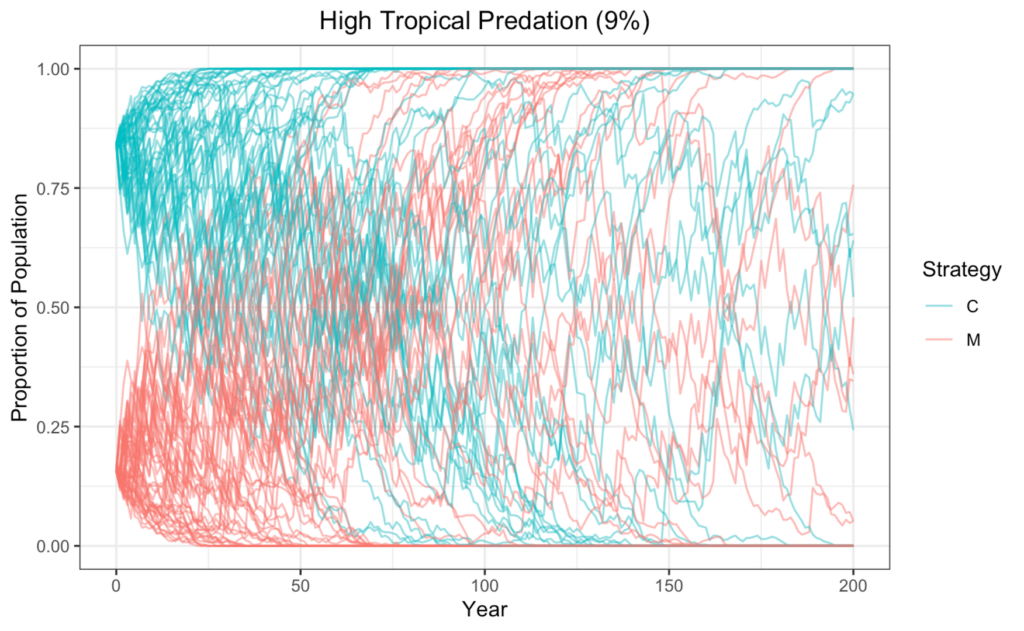
For more than a decade, the Riehl lab has studied cooperatively breeding Greater Anis (Crotophaga major) and has recently documented two distinct reproductive tactics among females. One type of female – called a “pure cooperator” – does not parasitize other females’ nests while another type of female employs a “mixed” strategy in which she begins a breeding season by cooperatively breeding but, if her nest fails, she switches to laying eggs parasitically. These two strategies are highly repeatable among individuals and have approximately equal fitness payoffs.
To further explore the dynamics of this system, I have developed an agent-based model that simulates the evolution of these two reproductive tactics. This project is ongoing, and its goals are (1) to explore how different parameter values (particularly rates of nest predation) impact the fitness of each reproductive tactic and (2) to use evolutionary invasion analyses to provide insights into the origins of the two tactics.